
Chardham Yatra-9N/10D
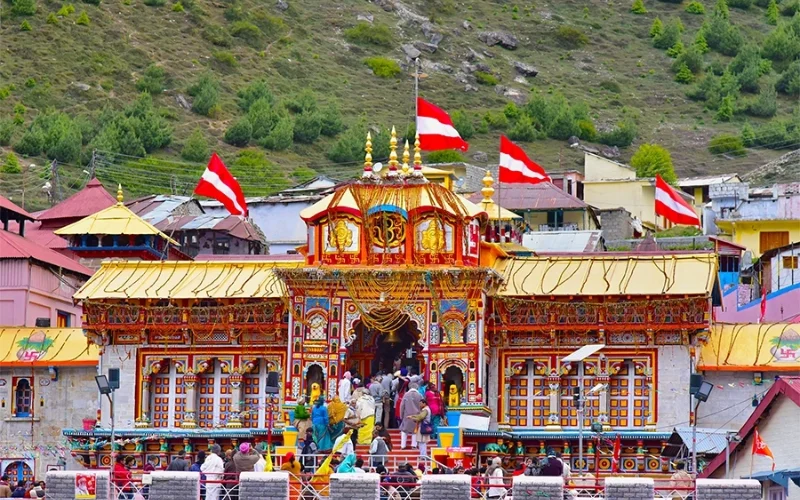
Chardham Yatra-9N/10D
- Duration: 09 NIGHTS / 10 DAYS
- Destination: Barkot (2N)--Uttarkashi (2N)--Kedarnath (1N)--Guptkashi--(2N)--Badrinath (1N)--Haridwar/Chopta/ Rudraprayag (1N)
Tour Itinerary
Get your free quote now! You can personalize and customize your package to match your travel plans perfectly.
Day 1: Haridwar – Barkot (210kms/7-8hr) Height: 1352 MTS.
Pick up at the hotel or train station in Haridwar, then travel through Mussoorie on your way to Barkot, stopping at Kempty Fall. Later, drive directly to Barkot. Arrive at Barkot and check into the hotel. Spend the night in Barkot.
Barkot’s weather is generally nice in the summer, with temperatures between 25 and 30 degrees Celsius. In the winter, the days are comfortable but the nights are chilly, with temperatures between 10 and 5 degrees.
Day 02: Barkot – Yamunotri – Barkot {36kms drive & 5 kms Trek (one side)} Height: 3235 MTS.
Drive to Jankichatti or Phoolchatti early in the morning after eating a packed breakfast, then begin your 6-kilometer trek to Yamunotri (either by foot, horseback, or Doli at your own expense). After bathing in the warm water of Jamunabai Kund and receiving “Darshan” from “Yamunaji,” walk back to Jankichatti. Afterwards, travel to Barkot and spend the night there.
Maharani Gularia of Jaipur constructed the Yamunotri Temple in the 1800s. It was reconstructed after being demolished twice in the current century. Rice can be cooked at Yamunotri by wrapping it in a cloth and dipping it in the Tapt Kund’s hot water. This cooked rice is brought home by pilgrims as “Prasad.” Divya Shila can be offered “Pooja” here, close to the shrine.
Surya Kund: The temple is close to a number of thermal springs that run into several pools. Surya Kund is the most significant of these.
Yamunotri Weather: Summertime temperatures range from 10 to 18 degrees Celsius. The nights are chilly, but the days are delightfully cool.
Day 03: Barkot – Uttarkashi (100kms/4hr) Height: 1352 MTS.
Drive to Uttarkashi in the morning after breakfast. Arrive in Uttarkashi and check into the hotel. Go to Uttarkashi’s Kashi Vishwanath Temple. Spend the night at Uttarkashi.
There are several temples and ashrams in Uttarkashi. The town’s location (to the north of) and resemblance to the city of Kashi (Varanasi) are reflected in its name. The town of Uttarkashi is located on the banks of the Ganga River, just like Varanasi.
One of the earliest Shiva temples in Northern India is Vishwanath Temple. rebuilt in the old architectural style in 1857 by Maharani Khaneti Devi of Tehri State. It is located in the center of the town. At the temple complex, a huge iron trident that represents the holy mother has been built and worshipped from ancient times. The temple complex also has the modest shrines of Ganeshji, Sakshi Gopal, and Markandeya Rishi. Special aartis are available in the morning and evening, including Akhand Jyoti and Akhand Abhishek. According to the Skunda Puran, Uttarkashi is referred to as “Saumya Varanasi,” one of the twelve Jyotirlingas and the residence of Lord Shiva in Kaliyug.
The Shakti temple is located just in front of the Vishwanath temple. It has a large “Trishul” that is almost 6 meters tall and has a bottom circumference of 90 centimeters. Although opinions on how this was constructed vary, it appears that the lower portion is made of copper and the higher portion is made of iron. According to the epics, the Goddess Durga (Shakti) threw this Shakti on the devils, which is how it got its name. This Shakti has been built here ever since.
Uttarkashi Weather: Summers are typically hot, with highs of 30 to 35 degrees Celsius, but nights are nice. Winters are cold.
Day 04: Uttarkashi – Gangotri – Uttarkashi (100kms/3-4 each side) Height: 3048 MTS.
Drive to Gangotri in the early morning (with a packed breakfast), stop at Gangnani for a holy dip in Garam Kund, and then continue on to Gangotri via the stunning Harsil Valley. Harsil is well-known for its breathtaking scenery and the breathtaking vistas of the mountains and deodar trees. Take a holy bath in the Ganges, also known as Bhagirathi at its source, after arriving to Shree Gangotri. After doing Pooja and Darshan, take some time to unwind in the beautiful surroundings. Drive back to Uttarkashi later. Spend the night at Uttarkashi.
Gangotri Temple: Located on the right bank of Bhagirathi, the temple was built in the eighteenth century by Gorkha General Amar Singh Thapa.
Gangotri Weather: Summertime highs of up to 20°C are possible. With a minimum temperature of 10° Celsius, summer nights might become colder. It is necessary to wear light wool clothing when visiting Gangotri in the summer. In Gangotri, the winter months are extremely cold. In the winter, Gangotri will be blanketed in snow. Because of the excessive snowfall, pilgrimage centers are closed throughout winter.
Day 05: Uttarkashi – Guptkashi (220kms/8-9hr) Height: 1319 MTS.
Drive to Guptkashi in the morning after breakfast, passing through Moolgarh and Lambgoan. The stunning Mandakini River is visible in Tilwara along the way. The Mandakini River originates in Kedarnath, travels beside the river to Guptakashi, and stops at the ArdhNarishwar Temple there. Arrive in Guptakashi and check into the hotel. Spend the night at Guptakashi.
Guptkashi:- The name Gupt Kashi literally means “Hidden Benares.” There are several links to the deity Shiva, and some are moreetymological than others. The reasoning for it being called Gupt Kashi, or Hidden Benares, refers to the fact that it was one stop on the search for a view of Shiva by the Pandava brothers, and Shivji first hid there, but then hid further up the gorge, finally reaching Kedarnath, where the Pandavas finally had their desire for a view of Shiva granted. There are more practical links, too, as the Kedarnath pandas stay in Guptkashi during the winter, and once the Kedarnath temple shuts for the winter, the idol of Kedarnath travels to Ukhimath, via Gupt Kashi, where it stays for the winter.
Guptkashi Climate: Pleasant, with a summer temp. ranging from 25-30 degree Celsius. Cold in winter.
Day 06: Guptkashi – Kedarnath (30kms by road & 19kms Trek one way) Height: 3384 MTS.
leave for Kedarnath Dham in the morning following breakfast. Have fun at Kedarnath Darshan. Spend the night in Kedarnath.
By Helicopter: Your pre-booked Helipad will be transferred by our driver in the morning. In order for the driver to be there to pick you up, you can let them know when you plan to arrive, whether by helicopter or on foot. Note: This bundle does not include a helicopter ticket.
By walk: After our driver drops you off in Sonprayag in the morning, you must take a local jeep to Gaurikund before starting your walk to Kedarnath Ji. You do the same after Darshan and return to Sonpraag. Due to a major parking problem, the driver will return to another palace if his contact number is invalid. In such case, you will need to either wait for your driver or arrange for another taxi.
Kedarnath: One of Lord Shiva’s twelve jyotirlingas, the Kedarnath shrine is a picturesque location set against the magnificent Kedarnath range. Lord Shiva is also known as Kedar. Legend has it that the Pandavas sought Lord Shiva’s blessings for forgiveness after defeating the Kaurava in the Kurukshetra battle because they felt bad about killing their own brothers. He continuously avoided them and sought safety at Kedarnath by transforming into a bull. He left his hump on the surface and dove under the ground as he was pursued.
Kedarnath Weather: Because of its high altitude, Kedarnath experiences cold weather for the most of the year. Here, winter is harsh, while summer is mild and lovely. The summertime temperature fluctuates by about 20°C. It is advised to wear light woolen clothing. Kedarnath experiences harsh winters with temperatures as low as 0°C. The location also receives snowfall around this period. Tourists typically avoid this time of year due to the severe weather.
Day 07: Kedarnath- Guptkashi
Return to Guptkashi by track or helicopter in the morning after Darshan. Spend the night at the hotel.
Day 08: Guptkashi – Badrinath (160kms/7hr) Height: 3133 MTS.
Drive to Badrinath in the morning after breakfast. Arrive in Badrinath and check into the hotel. After bathing in the Taptkund, pilgrims attend the evening Darshan of Badrivishal and Aarti. For Pinddan Shraddh of forefathers (Pitrus), Brahamakapal is important. Other fascinating tourist destinations are Mana, Vyas Gufa, Maatamoorti, Charanpaduka, Bhimkund, and the Saraswati River’s “Mukh.” Only three kilometers from Badrinathjee. Spend the night at Badrinath.
Mana settlement: The final Indian settlement before Tibet, it is home to an Indo-Mongolian people.
Bhim Pul: A huge rock that forms a natural bridge spans the rushing Saraswati River on the opposite side of Mana village. It is thought to have been erected there by Bhim, the second oldest of the five Pandava brothers, and offers a breathtaking view of water pouring down through the little channel beneath the rock.
Vyas Gufa (cave): Ved Vyas is thought to have written the Mahabharata and the Pauranic comments in this rock cave, which is close to Mana Village.
The average temperature in Badrinath will be between 8°C and 18°C on average. For a year-round stay in Badrinath, warm, woolen clothing is therefore necessary. Snowfall frequently occurs in Badrinath during the winter. With an average temperature of 5° Celsius, winter is quite cold. This time is typically off-limits to tourists due to the severe weather.
Day 09: Badrinath – Joshimath – Srinagar /Rudraprayag (180kms/7hr) Height: 895 MTS.
Driver for Srinagar in the morning after breakfast.
Srinagar’s weather is often hot in the summer, with temperatures between 35 and 40 degrees Celsius. In the winter, the days are nice but the nights are chilly, with temperatures between 20 and 5 degrees.
Day 10: Srinagar/ Rudraprayag – Haridwar (165kms/5-6hr)
Drive from Rishikesh to Haridwar in the morning after breakfast. The renowned spiritual town of Rishikesh, often known as the “place of sages,” is situated on the Ganga River and is encircled on three sides by the Himalayan Shivalik range. This region came to be known as Rishikesh because it is stated that when Raibhya Rishi performed severe penances, God appeared to him as “Hrishikesh.” Explore the temples and sights of Rishikesh, including Laxman Jhulla and Ram Jhulla. Drop off at the train station.
Inclusion
- Assistance at all arrival and departure points.
- Welcome Cake on arrival.
- Complimentary Candid Photography during the tour.
- Private air-conditioned vehicle for all sightseeing as per the itinerary in Port Blair and Havelock, including airport pickup and drop.
- Sightseeing as per the detailed itinerary.
- Expert travel assistance across all islands from the Fly High Travels team.
- 5% GST included in the package cost.
Exclusion
- Airfare, train fare, or any overland journey not mentioned in the itinerary.
- Medical or rescue evacuation expenses arising due to accidents or emergencies.
- Personal expenses, including laundry, bar bills, table bills, camera fees, tips, or any items of personal nature.
- Vehicle usage beyond the itinerary—vehicles are not available at disposal on any of the islands.
- Additional excursions or sightseeing not included in the suggested itinerary.
- Costs arising due to changes in itinerary or extended stays caused by flight cancellations, bad weather, roadblocks, ill health, or any circumstances beyond our control.
- Peak Season Supplement: A 10% surcharge applies from 15th December to 15th January for Premium and Luxury category packages.